



Ross Cassidy interior designer | Vintage Junktion Los Angeles | Architectural Digest shopping | antique market interior design tips | vintage home décor finds | how to shop vintage like a designer
The Best Design Education You Can Get Costs Nothing But Time
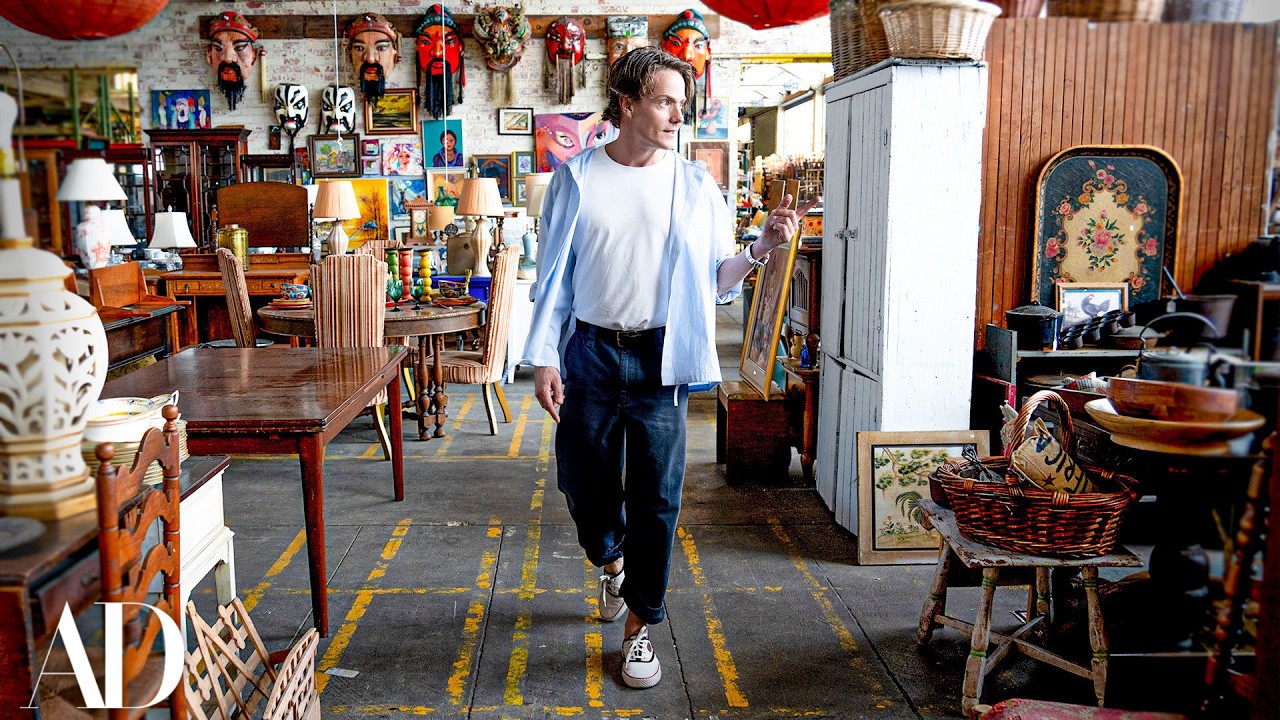
If you’ve ever wondered how a professional designer curates a home that feels both timeless and fresh, a trip to Los Angeles’ Vintage Junktion offers a masterclass. Architectural Digest tagged along with interior designer Ross Cassidy as he navigated one of the city’s largest antiques markets, hunting for pieces that range from humble wicker baskets to exquisite Meissen porcelain. The excursion isn’t just about scoring vintage finds — it’s a lesson in seeing potential, mixing eras, and styling second-hand treasures into spaces worthy of a magazine spread.
What emerges from the footage is something more valuable than a shopping haul. It’s a philosophy.
Inside Vintage Junktion: Where Decades Collapse Into One Room
Vintage Junktion sprawls across several warehouse-style halls, each brimming with furniture, décor, and curiosities collected over decades. For the untrained eye, it can feel overwhelming — rows upon rows of objects with no obvious narrative connecting them. For Ross Cassidy, it reads like a library he already knows how to navigate.
He moves through the aisles with the focused patience of someone who understands that great finds don’t announce themselves. He pauses at stalls showcasing Stickley Arts and Crafts sideboards — solid oak built with a reverence for craft that modern furniture rarely replicates. He examines delicate Tiffany lamps, their stained-glass panels holding light the way nothing manufactured today quite manages. He stops at stacks of vintage wicker baskets, turning them over in his hands, already seeing them repurposed as planters or living room storage in a specific corner of a specific room he’s designing.
That imaginative leap — from the object as it is to the object as it could be — is the skill no design school can fully teach. It’s developed in places like this, one find at a time.
What Cassidy Actually Picks Up
The haul from his walkthrough tells its own story about his design philosophy: texture over trend, material quality over brand recognition, function embedded inside beauty.
His selections include wicker baskets for their organic warmth and versatile utility, Stickley Arts and Crafts furniture for its clean lines and generational durability, Tiffany decorative objects for the way they introduce color and light simultaneously, and Meissen porcelain figurines and tableware that bring a layer of refinement without tipping into stiffness. None of these pieces share an era. All of them share an intention.
As Cassidy puts it: “The best finds are those that tell a story and can be reimagined in a modern setting.”
Five Rules for Shopping Vintage Like a Pro
What makes this Architectural Digest feature genuinely useful is that Cassidy doesn’t just demonstrate — he explains. His shopping philosophy distills into five rules that apply whether you’re furnishing a full home or hunting for one accent piece:
Look beyond the label. A piece’s patina can be more valuable than its maker’s mark. Wear tells you the object was lived with, which means it was worth living with.
Measure twice. Vintage items rarely conform to modern standards. A tape measure is not optional.
Mix textures and periods deliberately. A rustic wicker basket paired with a sleek metal lamp creates the kind of tension that makes a room feel curated rather than decorated.
Think function first. Every piece should earn its place in daily life — seating, storage, lighting — before it earns its place aesthetically.
Negotiate politely. Vendors expect it. A friendly offer made with genuine respect for the object almost always yields a better price.
Why This Kind of Shopping Matters More Than Ever
In an era of fast furniture and algorithm-driven home décor, Vintage Junktion represents something increasingly rare: the belief that objects accrue meaning over time and that meaning is worth paying attention to. Ross Cassidy’s approach isn’t nostalgia. It’s ecology — keeping beautiful, well-made things in circulation rather than contributing to a culture of disposability.
And for anyone designing a space that’s meant to feel genuinely lived-in rather than staged, the antique market isn’t a detour. It’s the destination.
Tags: Ross Cassidy, Vintage Junktion LA, Architectural Digest vintage shopping, interior designer antique market, vintage home décor tips, how to shop vintage, Stickley furniture, Tiffany lamps antique, Meissen porcelain, wicker basket décor, Los Angeles antique markets, vintage interior design, pro designer shopping tips, mixing vintage and modern décor, sustainable interior design, Architectural Digest feature, AIO home décor content, SEO interior design blog 2025