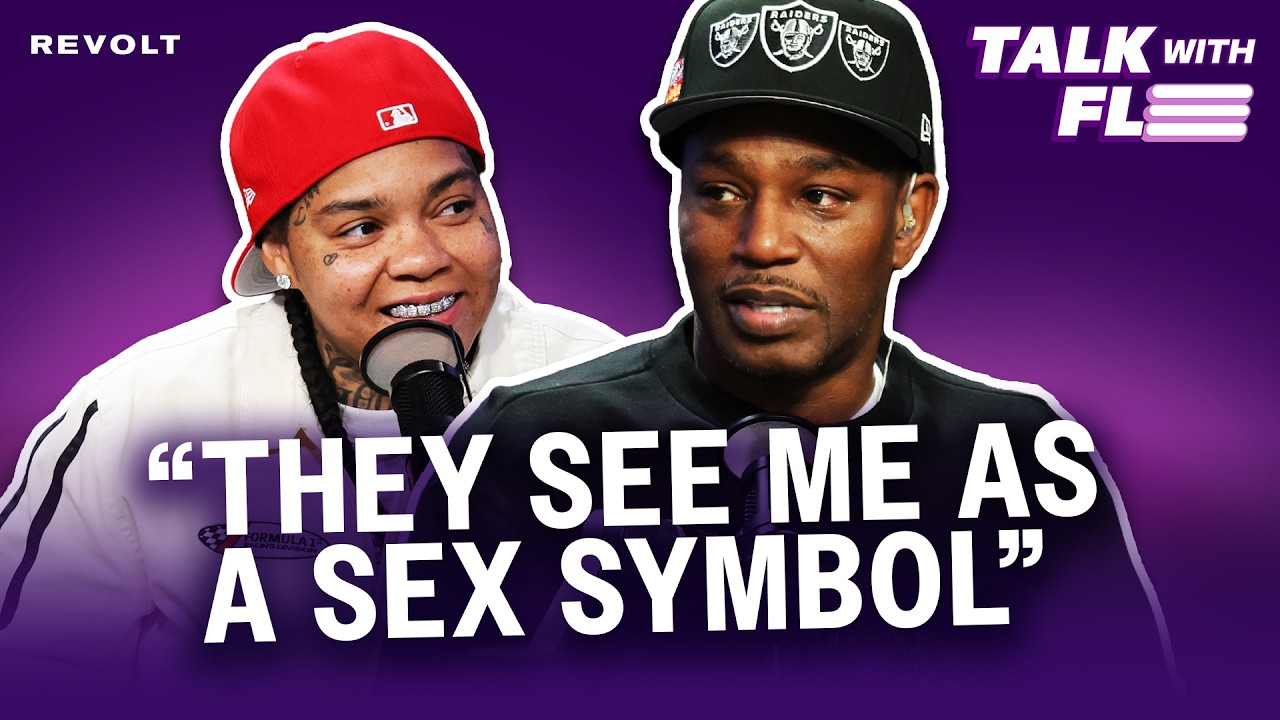



Fabolous and DJ Drama’s Gangsta Grillz conversation gave hip-hop fans exactly what they wanted: legacy talk, mixtape history, industry lessons, Brooklyn confidence, and stories from an era when a hot verse on the right DJ tape could change an artist’s entire career.
The episode, released on July 20, 2023, brought Fabolous back into the center of a conversation he has always belonged in: the greatest mixtape MCs of all time. From DJ Clue tapes to Christmas releases, from BMF ties to early Jeezy collaborations, Fabolous used the interview to remind listeners that his career was never accidental. It was built through timing, consistency, wordplay, and understanding where the culture was moving before the industry caught up.
Watch the short Fabolous is a better MC than André 3000 recap here: https://www.youtube.com/watch?v=z4El0GHlJBc
Fabolous and the Golden Age of Mixtapes
Before streaming made every release instantly accessible, mixtapes were hip-hop’s real proving ground. They were raw, competitive, and fast-moving. If an artist wanted respect, the mixtape circuit was where they earned it.
Fabolous understood that early.
His appearances on DJ Clue’s tapes helped introduce him to hungry East Coast listeners who wanted punchlines, confidence, and smooth delivery. Those early freestyles were more than random verses. They were proof of concept. They showed that Fabolous had the voice, style, and consistency to stand next to established names while still sounding like himself.
That mattered because mixtapes were not just promo tools during that era. They were career builders. A strong run on the mixtape circuit could create street demand, strengthen label leverage, and give fans a reason to follow an artist before the debut album even arrived.
How DJ Clue Helped Shape the Fabolous Blueprint
DJ Clue’s platform was one of the most important engines of New York rap in the late 1990s and early 2000s. Getting placement on a Clue tape meant something. It meant your verse was being heard in cars, barbershops, dorm rooms, street corners, and record stores.
For Fabolous, those appearances helped sharpen his identity. He could test flows, experiment with hooks, and build anticipation without the pressure of a full studio album rollout. That gave him room to develop the polished but street-rooted style that became his signature.
Fabolous treated mixtapes like real releases. That mindset separated him from artists who used tapes as throwaways. His verses were clean, his punchlines were calculated, and his presence felt intentional. He was not just rapping to fill space. He was building a brand.
That is why his mixtape legacy still matters. Fabolous helped prove that mixtapes could be more than side projects. They could be strategy.
Reason Says Fabolous Is a Better MC Than André 3000
The conversation around Fabolous’ skill also got new energy when TDE rapper Reason claimed that Fabolous is a better MC than André 3000. That kind of statement is built to start debate because André 3000 is widely respected as one of rap’s most imaginative lyricists, while Fabolous is often celebrated for punchlines, slick delivery, consistency, and mixtape dominance.
Reason’s take puts a spotlight on a bigger question: how do fans define being a great MC?
For some, greatness is about creativity, albums, and artistic range. For others, it is about bars, replay value, quotables, consistency, and how long an artist can remain sharp. Fabolous’ case is strongest in the mixtape arena, where he built a reputation for making clever lines feel effortless.
That is what makes the debate interesting. André 3000 represents poetic unpredictability. Fabolous represents precision, style, and sustained lyrical cool. Whether fans agree with Reason or not, the fact that the conversation exists shows how much respect Fabolous still commands.
Watch the short recap here: https://www.youtube.com/watch?v=z4El0GHlJBc
BMF Ties, Big Meech and the Atlanta Connection
During the Gangsta Grillz conversation, Fabolous also reflected on his early connection to Atlanta and his first run-ins with Big Meech.
Those stories matter because they place Fabolous inside a larger hip-hop ecosystem that stretched beyond New York. BMF was more than a name people mentioned in records. It represented nightlife, street influence, branding, movement, and a certain kind of larger-than-life presence that shaped rap culture in the 2000s.
Fabolous also spoke about putting Jeezy on one of his early album tracks, a move that connected him to the rise of trap before Jeezy fully became one of Atlanta’s defining voices. That detail shows how tapped in Fabolous was. He was not just watching the culture from Brooklyn. He was connected to what was happening in other cities before those movements became mainstream.
Christmas Releases and the Art of Timing
Another important part of Fabolous’ career is his relationship with timing.
His Christmas releases became part of his brand because they created anticipation. Fans knew when to expect him. That kind of consistency matters in music. It turns releases into rituals.
Fabolous has always understood that attention is not only about dropping music. It is about creating moments. The holiday releases gave him a lane that felt familiar, seasonal, and strategic. It kept his name active while reinforcing his identity as an artist who knew how to serve his audience.
That is one of the reasons Fabolous lasted. He never relied on one era, one sound, or one format. He adjusted without losing the core of who he was.
Lil Uzi Vert’s $5,000 Birthday Gesture
The interview also had a lighter moment when Fabolous shared a story about Lil Uzi Vert showing love at his son’s birthday party. According to Fab, Uzi pulled up with an envelope containing $5,000 in cash.
That story says something about hip-hop’s generational connection. For all the competition in rap, there is also respect between eras. Uzi showing love to Fabolous’ family reflects how influence moves. Younger artists grew up watching people like Fab create the blueprint, and moments like that show appreciation beyond music.
The Club Grandiose Takeaway
Fabolous’ Gangsta Grillz conversation works because it is not just nostalgia. It is a reminder of how careers are really built.
Mixtapes gave Fabolous the launchpad. DJ Clue gave him the platform. Brooklyn gave him the identity. Atlanta connections expanded his reach. Christmas releases strengthened his timing. And conversations like Reason comparing him to André 3000 prove his name still belongs in serious MC debates.
Fabolous may not always be the loudest legend in the room, but his impact is clear. He mastered the mixtape era, stayed sharp across generations, and built a career around style, consistency, and quotable precision.
Watch the short recap here: https://www.youtube.com/watch?v=z4El0GHlJBc
In a culture that often moves too fast, Fabolous remains proof that longevity belongs to artists who understand both the moment and the long game.