

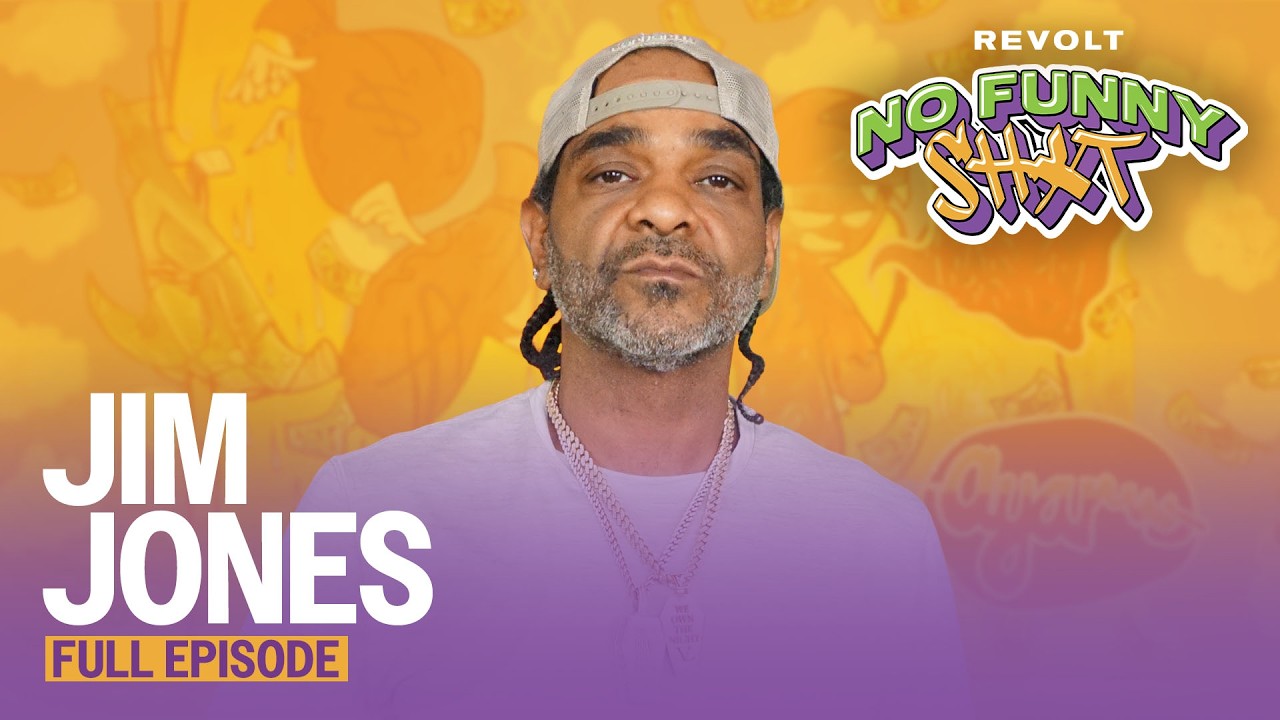
Jim Jones recently pulled up to the No Funny Shxt studio for a wide-ranging conversation that felt bigger than a standard interview. The Dipset veteran spoke with the confidence of someone who has survived every era of the music industry — mixtapes, major labels, streaming, fashion crossovers, Verzuz, and the current creator economy.
The conversation covered his latest project, The Landlord, but it also opened up into a deeper discussion about ownership, Harlem culture, lyrical standards, fashion, mentorship, Virgil Abloh, Kanye West, and what it really takes to last in hip-hop.
For Jim Jones, the message was clear: success is not just about having records. It is about having identity, leverage, taste, and the discipline to keep building when the spotlight shifts.
Why The Landlord Matters to Jim Jones
Jim Jones explained that The Landlord is not just another album title. It represents a mindset.
At this stage of his career, Jones is thinking less like an artist chasing a moment and more like a builder protecting a legacy. The word “landlord” points directly to ownership, responsibility, and control — three themes that have become central to his life as both a musician and entrepreneur.
The project reflects where he is now: still connected to the streets, still rooted in Harlem, but fully aware that real power comes from building something that lasts. For Jones, The Landlord is a soundtrack for people trying to own their space, whether that space is music, fashion, business, real estate, or community influence.
That is what makes the title hit harder. It is not just about being in the building. It is about owning the building.
The Business Is Learnable — But a Hit Is Different
One of the strongest moments in the interview came when Jim Jones separated the business side of music from the creative side.
He explained that contracts, merch, tours, and strategy can be learned. With the right discipline, guidance, and attention to detail, an artist can understand the mechanics of the industry. The business has rules. It has systems. It has paperwork. It can be studied.
But making a hit record is different.
A hit requires timing, emotion, instinct, and a feeling that cannot be forced in a meeting. Jim made it clear that you can understand the business and still struggle to create a song that moves people at scale. That honesty matters because a lot of artists confuse industry knowledge with creative greatness.
The real challenge is doing both.
Jones understands that longevity requires business sense, but impact still comes from the music. A spreadsheet can protect your money, but it cannot make people press replay. A contract can secure ownership, but it cannot create a hook that takes over the streets.
That balance is why Jim Jones has remained relevant. He respects the business, but he still knows the feeling is what keeps the culture listening.
Jim Jones on Lyricism and What Makes a Rapper Great
The conversation also moved into the state of lyricism in today’s hip-hop.
Jim Jones pushed back against the idea that being lyrical only means stacking complicated rhymes. For him, true lyricism is about communication. It is about saying something that connects, telling a story people believe, and delivering lines with enough presence to make listeners feel them.
That definition matters in today’s rap climate, where technical skill and emotional impact do not always live in the same place. Some artists can rap in circles but say nothing memorable. Others may use simpler language but communicate pain, ambition, hunger, and lifestyle in a way people instantly understand.
Jim’s view gives room for both veterans and younger artists. The best rappers are not just clever. They are effective.
His debate with KP about ego added another layer to the conversation. Jim acknowledged that confidence is necessary. You cannot be great in hip-hop without believing you belong. But he also made the distinction between confidence and arrogance. Confidence pushes an artist to compete. Ego, when unchecked, can stop an artist from growing.
That is a veteran perspective. The same ego that helps you get noticed can become the same ego that keeps you from evolving.
Harlem Drip Is Bigger Than Fashion
Jim Jones has always understood style as language.
During the interview, his passion for fashion came through naturally. For him, Harlem drip is not just about expensive clothes. It is about detail, confidence, creativity, and knowing how to put pieces together in a way that feels original.
That is the Harlem standard. It has never been only about price tags. It is about presence.
Jones talked about staying fresh without overspending, pointing to practical style moves like thrift finds, layering, shoes, accessories, and personal taste. That message fits his larger philosophy: looking good is not about copying a luxury campaign. It is about understanding yourself well enough to make anything look intentional.
Harlem has always moved like that. From tailored streetwear to oversized luxury statements, the neighborhood has shaped hip-hop fashion for decades. Jim Jones carries that history with him. When he talks about drip, he is talking about culture, not costume.
Helping the Next Generation of Harlem Creators
One of the most important themes in the conversation was mentorship.
Jim Jones spoke about opening doors for emerging Harlem talent, whether through music, fashion, events, or access to creative spaces. That matters because legacy is not only what you accomplish personally. Legacy is also what you make possible for the people coming behind you.
At this point, Jim is not just representing Harlem. He is helping extend its creative pipeline.
That role fits the Landlord concept perfectly. A landlord does not just occupy space. A landlord controls access, creates opportunity, and decides what kind of energy lives in the building. Jim seems to understand that his influence can create real pathways for younger artists and designers who may not have the relationships or resources to move through the industry alone.
For Club Grandiose readers, that is the blueprint. Build enough leverage to not only win for yourself, but to put others in position.
Virgil Abloh, Kanye West and the Power of Creative Relationships
Jim Jones also reflected on his relationships with Virgil Abloh and Kanye West, two figures who helped redefine the bridge between hip-hop, streetwear, and luxury fashion.
Those connections are important because they show how Jim’s influence has always stretched beyond music. Dipset helped define an era where rap style became just as important as rap sound. Pink polos, bandanas, designer pieces, custom fits, leather, denim, and Harlem color theory all became part of a larger fashion conversation.
Virgil understood that. Kanye understood that. Jim lived it.
His relationships with both creatives gave him a front-row seat to the evolution of streetwear into luxury fashion. More importantly, those relationships reinforced what Jim already knew: culture moves first, and the industry follows later.
Whether in music or fashion, genuine creative relationships matter. They keep artists inspired, grounded, and connected to something bigger than transactions.
The Real Lesson From Jim Jones’ No Funny Shxt Interview
Jim Jones’ conversation on No Funny Shxt worked because it showed every side of his evolution.
He is still the Harlem rapper. Still the Dipset veteran. Still the style guy. Still the entrepreneur. But he is also becoming something bigger: a cultural elder with real experience to pass down.
The Landlord represents that shift. It is about ownership, legacy, and responsibility. His comments on the music business show that success requires both structure and instinct. His thoughts on lyricism remind artists that skill means nothing without connection. His fashion advice proves that taste beats price. His mentorship of Harlem talent shows that influence should create access.
And his reflections on Virgil and Kanye place him inside a larger story about how hip-hop reshaped luxury culture.
Jim Jones is not just talking about surviving the industry. He is talking about owning your position inside it.
That is the real takeaway.
In music, fashion, business, and culture, the goal is not just to get in the room.
The goal is to become the landlord.