


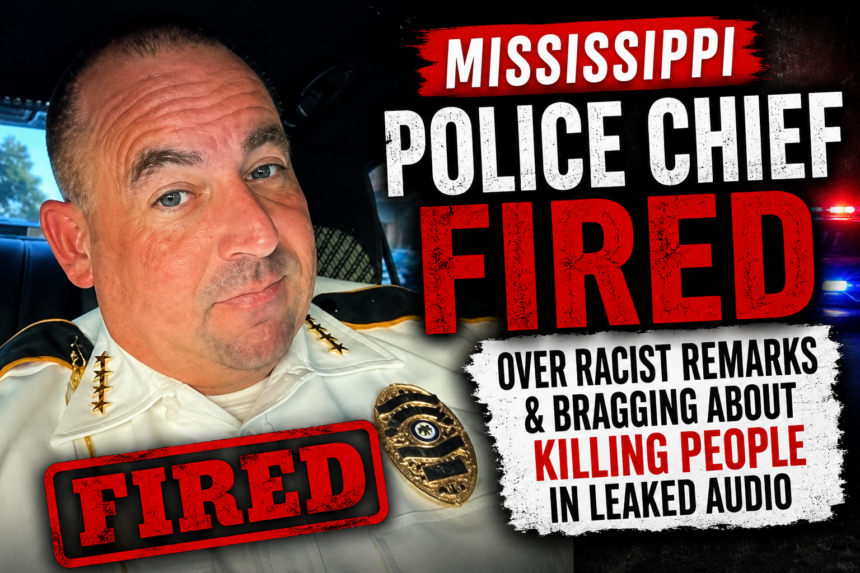
A former Mississippi police chief came under intense national scrutiny after being fired over a leaked audio recording that allegedly captured him using racist language, homophobic slurs, and making disturbing comments about deadly encounters during his law enforcement career. The incident sparked widespread outrage, raised serious questions about police culture within the department, and renewed discussions about accountability and transparency in law enforcement agencies across the United States.
Sam Dobbins, who served as the police chief of Lexington, Mississippi, was removed from his position after the recording became public. According to reports, the audio contained multiple offensive remarks, including racial slurs and derogatory comments directed at minority groups. The recording also allegedly featured Dobbins discussing incidents involving the use of deadly force while working as a police officer.
One of the most controversial claims attributed to Dobbins in the recording was his statement that he had killed 13 people during his law enforcement career. He reportedly insisted that each of those incidents was justified. In another shocking portion of the audio, Dobbins allegedly described a shooting involving a Black man and claimed that the individual had been shot 119 times. The comments quickly drew condemnation from community members, civil rights advocates, and public officials who questioned both the language used and the attitudes reflected in the recording.
Watch the Video:
Mississippi Police Chief Fired Over Racist Remarks & Bragging About Killing People In Leaked Audio
The audio was reportedly recorded by former Lexington police officer Robert Lee Hooker. Hooker stated that he decided to leave the department because of what he described as a toxic work environment. According to his account, concerns about the culture within the department motivated him to preserve evidence of conversations that he believed demonstrated serious problems among leadership.
As news of the recording spread, public reaction intensified. Residents and advocacy groups demanded accountability and called for local officials to take action. The controversy soon became a major issue within the community, prompting discussions about leadership, professionalism, and public trust in law enforcement.
In response to the growing backlash, Lexington’s Board of Aldermen reviewed the situation and ultimately voted to terminate Dobbins from his position as police chief. The decision marked a significant development in the controversy and was viewed by many as an effort to address public concerns and restore confidence in local government and law enforcement institutions.
However, the fallout did not end with Dobbins’ dismissal. The controversy led to broader concerns about policing practices within the Lexington Police Department and whether the attitudes reflected in the recording were isolated or indicative of deeper systemic issues. Community members and civil rights organizations continued to push for greater oversight and investigation into the department’s operations.
The case eventually attracted the attention of federal authorities. Investigators examined allegations involving excessive force, discriminatory policing practices, and potential civil rights violations within the community. The increased scrutiny highlighted the importance of independent oversight when serious allegations emerge against law enforcement agencies.
For many observers, the incident became a powerful example of how leaked recordings and whistleblower actions can bring hidden issues to public attention. It also underscored the role that transparency plays in maintaining public confidence in government institutions. When allegations of misconduct arise, communities often expect swift investigations and meaningful accountability measures.
Today, the case continues to be referenced in discussions about police reform, ethical leadership, and the responsibilities of public officials. Advocates argue that accountability mechanisms, transparency, and community oversight are essential for ensuring that law enforcement agencies serve the public fairly and professionally. The controversy surrounding Sam Dobbins remains a notable example of how public trust can be damaged when allegations of misconduct emerge and why many believe strong accountability standards are necessary within modern policing.
Watch the Video:
Mississippi Police Chief Fired Over Racist Remarks & Bragging About Killing People In Leaked Audio