



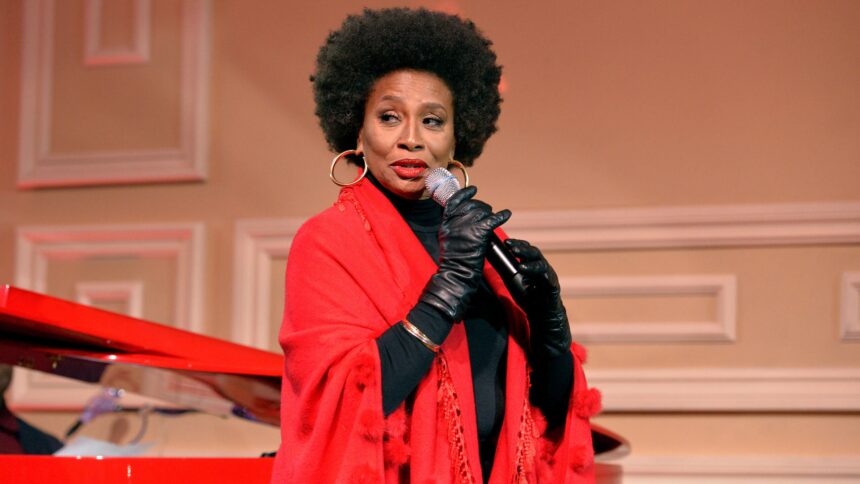
Jennifer Lewis bipolar disorder | Walking In My Joy Jennifer Lewis | Jennifer Lewis sex addiction | Black Mothers Matter | Jennifer Lewis interview 2025 | celebrity mental health
▶️ Watch the Full Interview: Jennifer Lewis — Walking In My Joy, Bipolar, Sex Addiction & More
Jenifer Lewis The Woman Who Refuses to Whisper
Jennifer Lewis doesn’t do hushed tones. She never has. The actress, singer, activist, and self-proclaimed “Mother of Black Hollywood” has built an entire career — and an entire life philosophy — on the radical act of saying the quiet part loud, at full volume, with a smile that dares you to look away.
In her latest sit-down interview, Lewis covers ground that most celebrities wouldn’t touch with a ten-foot publicist. She talks about bipolar disorder not as a confession, but as a conversation starter. She discusses her sex addiction with the kind of candor that makes you realize shame has never lived in this woman’s vocabulary. And she talks about joy — specifically, her book Walking In My Joy — as though she has earned every syllable of that title. Because she has.
Bipolar and Unashamed
Jennifer Lewis was diagnosed with bipolar disorder in her forties, after decades of riding what she describes as waves she couldn’t name. The highs were extraordinary — electric, creative, unstoppable. The lows were crushing. And for years, like so many people living with undiagnosed mental illness, she moved through the world absorbing the weight of both without understanding what she was carrying.
Going public with her diagnosis was not a moment of weakness. It was an act of war against stigma — particularly the specific, layered stigma that surrounds mental health in the Black community, where the expectation to be strong, to push through, to keep it together has historically come at a devastating cost.
“I decided I was going to talk about it because my silence wasn’t going to help anybody,” she has said. And that decision — to speak rather than suppress — turned Lewis into an unlikely but essential mental health advocate. Her openness gave language to thousands of people who had been living in the same silence.
In the interview, Lewis talks about what it actually looks like to manage bipolar disorder daily: the discipline of medication, the commitment to therapy, the ongoing work of knowing your own mind well enough to catch yourself before the wave crests. It’s not a recovery story in the Hollywood sense — neat, linear, resolved. It’s a real one.
▶️ She tells it better than anyone could summarize it — Watch the Full Interview: Jennifer Lewis — Walking In My Joy, Bipolar, Sex Addiction & More
“Retiring” the Sex Addiction
Lewis addresses her sex addiction with the same unblinking directness. She has spoken about it publicly for years, tracing its roots to trauma, to the specific hunger for connection that comes from early wounds, and to the way she used intimacy — or the performance of it — as a substitute for something deeper she needed but didn’t yet know how to ask for.
The word “retiring” in how she describes her relationship with that chapter is both funny and profound, which is quintessentially Jennifer Lewis. She’s not erasing it. She’s not pretending it didn’t happen. She’s acknowledging it as part of her story — one chapter in a life that contains many — and placing it in its proper context: the past.
What replaces it is the work. Therapy. Community. Purpose. The kind of intentional living that doesn’t happen accidentally but through consistent, sometimes painful, always honest self-examination.
Walking In My Joy
Her book Walking In My Joy: In These Streets is the summation of everything she has survived, processed, and chosen to share. Part memoir, part manifesto, it doesn’t ask the reader’s permission to be joyful despite difficulty. It insists on it.
Lewis’ definition of joy is not passive. It is not the absence of pain or struggle or diagnosis. It is something you move toward actively, something you choose when the easier choice would be to stop choosing altogether. For a woman who has navigated bipolar disorder, addiction, public scrutiny, and the particular exhaustion of being a Black woman in Hollywood for five decades, joy is a discipline.
At 67, Jennifer Lewis is not slowing down. She is still acting, still singing, still speaking — and still refusing to let anyone else set the terms of her narrative.
Her story is not a cautionary tale. It is an instruction manual. And she wants you to read the whole thing.
▶️ Don’t just read about it — Watch the Full Interview: Jennifer Lewis — Walking In My Joy, Bipolar, Sex Addiction & More
Tags: Jennifer Lewis, Walking In My Joy, Jennifer Lewis bipolar disorder, Jennifer Lewis sex addiction, Black celebrity mental health, bipolar disorder awareness, mental health stigma Black community, Jennifer Lewis book, Mother of Black Hollywood, Jennifer Lewis interview, celebrity wellness, Jennifer Lewis activism, Black women mental health, bipolar disorder representation, sex addiction recovery, joy and mental health, AIO wellness content, SEO mental health blog 2025