



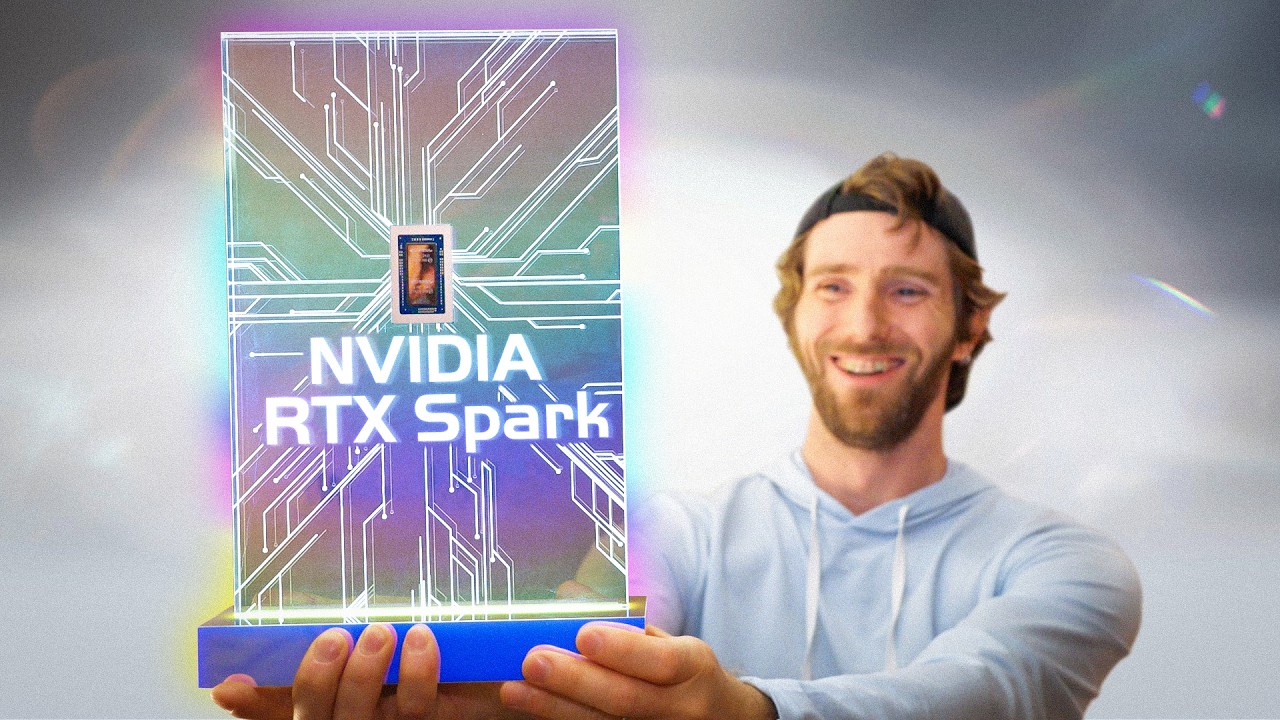
NVIDIA RTX Spark: A New ARM‑Based Superchip for Windows on ARM Laptops
In a move that could reshape the thin‑and‑light laptop market, NVIDIA has unveiled RTX Spark, an ARM‑based superchip that promises to bring desktop‑class graphics and AI horsepower to the next generation of Windows on ARM machines.
Hardware side of things
At the heart of RTX Spark lies a massive 128 GB of unified memory, a figure that dwarfs what most current ARM laptops offer. Paired with over 6 000 CUDA cores, the chip is designed to handle demanding workloads—from 3D rendering to real‑time ray tracing—without the need for a discrete GPU.
The unified memory architecture means the CPU, GPU, and AI accelerators can all draw from the same pool, reducing latency and simplifying software stacks.
The promises
NVIDIA claims RTX Spark can run local AI models with up to 120 billion parameters directly on the laptop, opening the door to on‑device generative AI, large‑language‑model inference, and advanced computer‑vision tasks that previously required cloud connectivity.
For creators and gamers, the chip also supports DLSS 3 with Ray Reconstruction, aiming to deliver higher frame rates and sharper image quality in supported titles.
The elephant in the room
Apple’s M‑series chips have long set the bar for performance‑per‑watt in the ARM laptop space. By targeting Windows on ARM, NVIDIA is stepping into a territory where software compatibility and driver maturity have historically lagged behind the x86 ecosystem.
The big question is whether Windows on ARM can finally reach a tipping point where native applications, drivers, and tools are as plentiful and polished as they are on Intel/AMD platforms.
How did NVIDIA do it?
RTX Spark leverages NVIDIA’s Ada Lovelace architecture, adapted for an ARM instruction set. The chip integrates:
- A high‑core‑count GPU built on the same 4 nm process as the desktop RTX 40 series
- Dedicated Tensor cores for AI acceleration
- RT cores for hardware‑accelerated ray tracing
- A custom ARM‑compatible CPU complex designed to feed the GPU efficiently
By keeping the memory pool unified and tightly coupling the CPU and GPU domains, NVIDIA reduces the data movement bottlenecks that often plague heterogeneous systems.
But what about us desktop folks?
While the spotlight is on laptops, NVIDIA hints that the same technology could trickle down to desktop‑class ARM solutions in the future. For now, desktop users will continue to rely on the established RTX 40 lineup, but the architectural lessons learned from RTX Spark may influence upcoming GPU designs.
DLSS Ray Reconstruction
One of the most exciting features bundled with RTX Spark is DLSS 3’s Ray Reconstruction. This AI‑driven technique refines noisy ray‑traced images in real time, delivering cleaner reflections, shadows, and global illumination without a massive performance hit.
Early demonstrations show a noticeable uplift in visual fidelity, especially in titles that already support ray tracing.
Let’s look at some laptops
Several OEMs have already announced systems built around RTX Spark. Two standout examples are:
- ASUS ProArt P14 – Aimed at creators, this thin‑and‑light workstation pairs the chip with a colour‑accurate display and ISV‑certified drivers.
- Microsoft Surface Ultra – A premium convertible that promises all‑day battery life while still delivering GPU‑accelerated workloads.
Both laptops highlight the chip’s ability to fit into slim chassis without sacrificing performance.
Time to get uncomfortable
Adopting a new architecture always brings growing pains. Driver stability, software optimization, and ecosystem maturity are hurdles that NVIDIA and its partners will need to clear. Yet, if RTX Spark delivers on its promises, it could finally give Windows on ARM the graphics muscle it needs to compete head‑to‑head with Apple’s silicon.
“RTX Spark isn’t just a spec bump—it’s a rethinking of how GPU, CPU, and AI resources can share memory on an ARM platform, potentially reshaping what thin‑and‑light laptops are capable of.”